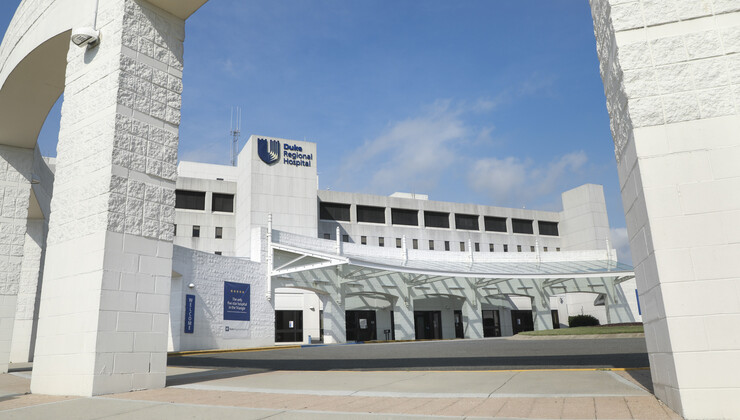
Thank you for choosing the James E. Davis Ambulatory Surgical Center for your surgical procedure. Our healthcare team is dedicated to providing an efficient and safe environment for our patients and their families.
For more than 20 years, the multi-specialty James E. Davis Ambulatory Surgical Center (DASC) has been dedicated to providing outpatient surgery in a warm, caring environment. DASC surgeons perform approximately 6,000 surgeries annually, including endoscopy procedures such as colonoscopies; ear, nose and throat surgery; ophthalmology procedures, cosmetic surgery and general surgery. Pediatric procedures include ear, nose and throat surgery, ophthalmology procedures and general surgery.
Our mission: To provide high quality healthcare for the community.
Our vision: Striving to be the leading provider of ambulatory services in the community. Exhibiting excellent customer service as demonstrated by teamwork and patient centered care. Committed to safety, education and innovative technology through passion and dedication.
Our values: Dedication, Trust, Accountability, Respect, Teamwork, Honesty, Integrity, Loyalty, Kindness, Humanity and Flexibility.
Our goals: To be the health resource of choice. To provide an efficient and caring environment for the patients, families, physicians and staff. To provide cost-effective services. To strive for consistent, successful patient outcomes.
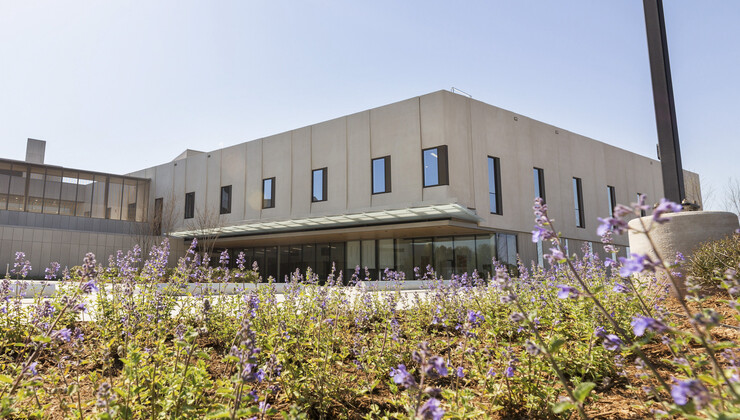
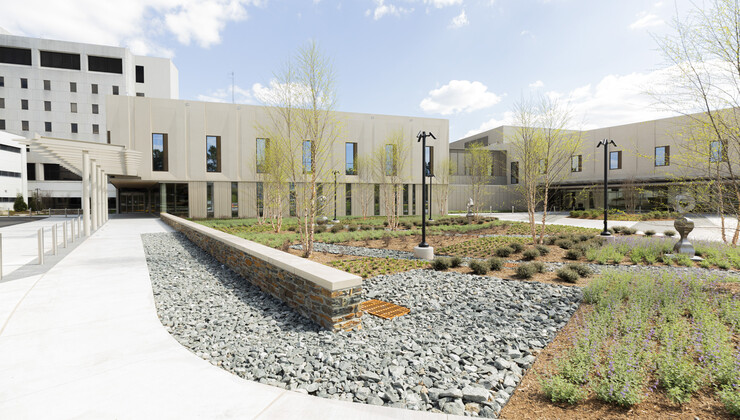
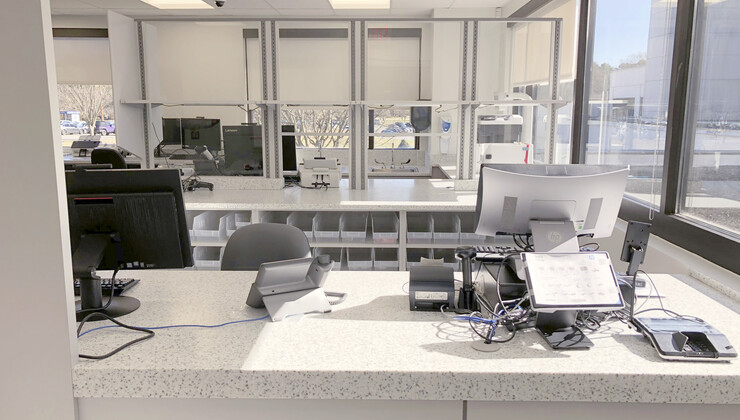
Our newly renovated and expanded facility includes four pre-and post-operative bays for patients having endoscopic procedures, an expanded lobby, a vending/ TV area for patients, two patient-physician consultation rooms, additional space for patient registration and an additional handicap-accessible ramp. Wireless Internet access is available.
Davis Ambulatory Surgical Center is located at:
120 East Carver Street
Durham, NC 27704
919-470-1000
From Roxboro
Take US-501 South to Durham. Keep LEFT at the Duke Street/Roxboro Street fork to go on US-501 South / N Roxboro Street. Approximately 1.1 miles past the split, turn LEFT on Carver Street, and the surgical center is the third building on the right.
From Points West
Take I-85 to Exit 176B DukeSt/US-501 N. Go North on Duke Street approximately 1.4 miles. Turn RIGHT onto Carver Street. Cross over Roxboro Street, and the surgical center is the third building on the right.
From Points East
Take I-40 to NC-147 N via EXIT 279B toward Durham/Downtown. Take the Duke Street exit - EXIT 12C. Follow Duke Street approximately 3.2 miles North to Carver Street. Turn RIGHT on Carver Street. Cross over Roxboro Street, and the surgical center is the third building on the right.
Parking
For your convenience, free visitor parking is located at the front of the surgical center.
The safety of our patients and employees is our priority. James E. Davis Ambulatory Surgical Center (DASC) will be open for surgery as long as we believe it is safe for people to travel to and from the center.
If you believe the roads are hazardous, or if the weather forecast indicates they may become hazardous, call 919-470-1000 before beginning your trip to the center.
If the facility is closed, information will be left on the voice message, which can be reached by calling 919-470-1000.
If DASC is closed on your scheduled day for surgery, please consult your surgeon’s office for your rescheduled date of surgery. The new surgery date will be scheduled after you and your surgeon agree on a mutually convenient date and time. Your surgeon’s office will notify us of the new time.
Your vital signs will be continuously monitored during your procedure. Your entire healthcare team will individualize your care. We want to make your experience as positive and comfortable as possible. Please feel free to ask any questions, or express any concerns you may have.
Patients who have a local procedure do not receive any IV sedation, but receive numbing medications at the surgical site.
If you have IVA, General or Block anesthesia you will have the opportunity to talk with a member of the anesthesia team either over the phone or at a preoperative (pre-op) interview on a day before your procedure.
If your physician orders IVCS for your procedure, you will have an IV inserted in the pre-op area. You may receive several medications through your IV, including a narcotic such as Fentanyl, for pain control. You may also receive a relaxing medication, such as Versed. There are different levels of sedation ranging from awake and comfortable to sleeping soundly.
Your surgeon and anesthesia team may decide on IVA anesthesia for your surgical procedure. With this type of anesthesia, an IV will be inserted in the pre-op area. You could receive several medications through your IV. These could include a narcotic, such as Fentanyl, for pain control, and a relaxing medication, such as Versed. There are various levels of sedation ranging from awake and comfortable to sleeping soundly. This sound sleep often mimics general anesthesia, but it is not to be confused with general anesthesia, which is often called being “put to sleep.”
Your surgeon and anesthesiologists may recommend regional anesthesia as a choice for your procedure. In addition to the IVA anesthesia, your anesthesiologists may place some numbing medication into the nerve area to block any sensation or pain for a period of time.
Some surgical procedures require general anesthesia. Most times, with general anesthesia you will receive your IV in the pre-op area. You may receive a variety of medications depending on factors such as the type and length of your surgical procedure.
You may receive several medications through your IV, including a narcotic such as Fentanyl, for pain control. You may also receive relaxing medications to help you relax, such as Versed. Other medications may be given, such as Propofol which is used to “put patients to sleep.” In addition, you may receive inhalation agents, referred to as gas. There are also various medications that may be given to help prevent nausea. Your physician may also request that an antibiotic be given.
With general anesthesia you will require some type of airway assistance, again depending on factors as the type and length of the procedure.
A variety of medications may be given to you during your care at Davis Ambulatory Surgical Center (DASC). Your medications are selected specifically for you by your surgeon and /or anesthesiologist.
Following your surgery or procedure, you will be taken to the perianesthesia care unit (PACU). After awakening, you will be given something to drink and asked about your level of pain. Many factors are considered to determine the type of medication you may be offered. Such factors may include your type of surgery and anesthesia, allergies, pain scale and nurse’s evaluation. Below is a summary of some of the medications more commonly given.
Narcotic medications are used frequently after surgery. They are given to patients who need analgesia for moderate to severe pain. These medications bind with opiate receptors in the central nervous system altering your perception of and emotional response to pain. All narcotics may cause drowsiness, lightheadedness, nausea, vomiting and constipation. It is advised to take narcotic medications with food in order to lessen nausea. Increasing the fiber and fluids in your diet will help to decrease constipation. Avoid driving and making important decisions during this time. It is important that patients prescribed a CPAP machine previously continue to use it during narcotic ingestion.
Examples: oxycodone (Percocet), hydrocodone (Vicodin) acetaminophen with codeine (Tylenol with codeine), propoxyphene (Darvocet), merperidine (Demerol), hydromorphone (Dilaudid) and Morphine.
Many of these narcotics contain acetaminophen (Tylenol) such as: Percocet, Vicodin, Tylenol with Codeine, and Darvocet. Do not take Tylenol when taking medications that also contain this. Most of these medications can be given in tablet, injection or liquid form.
Non-steroidal, Anti-Inflamatory Medications (NSAIDS) may also be given to decrease pain. These medications are different from narcotics in that they produce anti-inflammatory, analgesic and antipyretic effects. Advise your doctor if you have peptic ulcer disease, asthma or kidney problems while taking these medications.
Examples: ketorolac, (Torodol) ibuprofen (Advil), naproxen sodium (Aleve) and mobic (Meloxicam).
Antiemetic drugs are given for prevention of nausea and vomiting. Many times these type drugs are given during and after surgery. These medications may cause headache, drowsiness and dry mouth. Make your doctor aware if you have asthma, glaucoma, seizure disorder or kidney problems. Examples: ondansetron (Zofran), dolasetron (Anzemet) and metoclopramine (Reglan).
Antihistamine drugs are given for allergies and also to prevent nausea and vomiting. They compete with histamine for h1 receptor site on effector cells. These medications may cause sleepiness, dry mouth and photosensitivity. Advise your doctor if you have asthma, glaucoma, seizure disorder or take the medication lithium.
Examples: diphenhydramine (Benadryl), promethazine (Phenergan) and cetirizine (Zyrtec). If taking these medications at home, take with food, avoid alcoholic beverages, driving and dangerous activities. Do use sun block while outside.
On occasion Phenergan may be given along with a narcotic in order to prevent the nausea and vomiting associated with taking narcotic medications. Phenergan may also be given in suppository form.
Non-narcotic analgesic and antipyretic medications, such as acetaminophen (Tylenol) and aspirin, are what you may take at home for pain and fever. The action of these medications produce analgesia by blocking pain impulses and also decrease fever by affecting the hypothalamic heat-regulating center. They do not cause sleepiness and can be taken in tablet, caplet, suppository and liquid form. With children, a Tylenol suppository may be given during surgery. This helps with postoperative pain control. Your PACU nurse will inform you if this was done and advise a time that the next dose of the medication may be given if needed.
Antibiotics are given intravenously during surgery, if ordered by the surgeon. This is done to prevent infection and promote healing. Your PACU nurse will advise when to take your antibiotic at home, if given.
Steroids decrease inflammation. It is not clearly defined how this works but is thought to stabilize leucocyte lysosomal membranes. In surgeries where edema (swelling) may be a problem, steroids may be given. Occasionally a steroid may be given to prevent nausea and vomiting as well. They are usually administered during surgery and may be repeated in the PACU area. Examples of the drugs are decadron (Dexamethasone) and prednisone.
This information may not include all medications that may be given to you during your visit to DASC, therefore address any questions or concerns to a member of your care team.
As you prepare for surgery, we want to make sure you understand how you will be billed for the services you receive. At a minimum, you will receive two separate bills. Depending on your specific surgery, you may also get additional bills. The success of your surgery depends on a team effort by many dedicated professionals, including those in our center. Because government and insurance rules do not permit us to bill or collect money for team members, each member of the team must send you a separate bill and collect payment from you separately.
We realize that these multiple bills can be confusing. If you have any questions, contact us at 919-470-1000. Our staff will answer your questions and guide you to the proper sources of information.
Explanation of bills you will receive:
An estimated pre-determined fee is charged for the use of the facility. This fee includes medications, most supplies, and charge for operating room time. There is an additional fee for the Recovery Care Center.
We will file your insurance claim for you. Prior to your procedure, a staff member from DASC will contact you to discuss your financial obligations. A deposit may be required on the day of surgery, depending on verification of benefits from your insurance company. This deposit is calculated based on the estimate of the facility fee and any applicable deductibles, co-pays or coinsurance charges. Questions and payments regarding your surgery center billing should be addressed to the Davis Ambulatory Surgery Center. Elective plastic surgery fees are based on time and do not include implants, overnight stay, laser fees or preoperative testing.
Since your Physician is not an employee of Davis Ambulatory Surgical Center, he/she will bill you separately for their services. Contact your physician’s office should you have any questions regarding charges or payments for their services
The anesthesia you receive will be provided by Regional Anesthesia, PLLC. The anesthesiologist will give you either intravenous or general anesthesia and will monitor you throughout the surgery. You will receive a separate bill for anesthesia services and should address all questions regarding these services with Regional Anesthesia.
Depending on your particular surgery, you may receive services for which you will get additional bills. These include:
You will receive a separate bill from the provider for each of the applicable services. You must address all questions and send all payments separately to each individual provider.
“It was my second time at the center and I received exceptional care from pre-op, billing, admission to discharge”
“I have nothing but praise for the Davis Ambulatory Surgical Center.”
“Wonderful care, excellent nurses. Great place. We are fortunate to have DASC in Durham”
“I would recommend the center to ALL family and friends. Exceptional care!”
“Everyone is a joy to be around.”
“I felt very comfortable and the staff made me feel like I was the only patient. This was my best experience.”
“All the nurses were wonderful and caring. I didn’t feel like a number who was just there waiting to get pushed out the door.”
“All hospitals should take notes form the staff on how to take care of patients. Everyone was extremely professional and caring.”
Davis Ambulatory Surgical Center
120 E. Carver Street
Durham, NC 27704
Davis Ambulatory Surgical Center
P.O. Box 15727
Durham, NC 27704
Main number: 919-470-1000
1-800-510-8318
Director- Hope Mangum, RN, 919-470-1020
Medical Director- Dr. John F. Heath, 919-470-1065
OR Nurse Manager – Sherry Strader, RN - 919-470-1019
Periop Nurse Manager – Shelley Harmon, RN - 919-470-1038
Business Office Manager – Christine Nicklin - 919-470-1012
Credential Compliance Coordinator – Priscilla Coleman, RN - 919-470-1047
Accounts Payable – Sheila Harmon - 919-470-1003
Anesthesia Preop Interview - Connie Cox - 919-470-1023
Billing – Tammy Gentry – 919-470-1009
Collections/Refunds – Deidre Hester-Jackson – 919-470-1011
Finance/Information Systems – Sally Walters - 919-470-1008
Materials Manager – Charlotte Chambers – 919-470-1018
PACU (Recovery Room) – 919-470-1036
Preop – 919-470-1040
Recovery Care Center (Overnight) – 919-470-1049
Scheduling – Cheryl Richardson - 919-471-1004 and Lisa Rigsbee - 919-470-1035
For assistance or for numbers not listed, please call 919-470-1000.